Eco Open Water vs Open Water: What the Extra Training Gets You
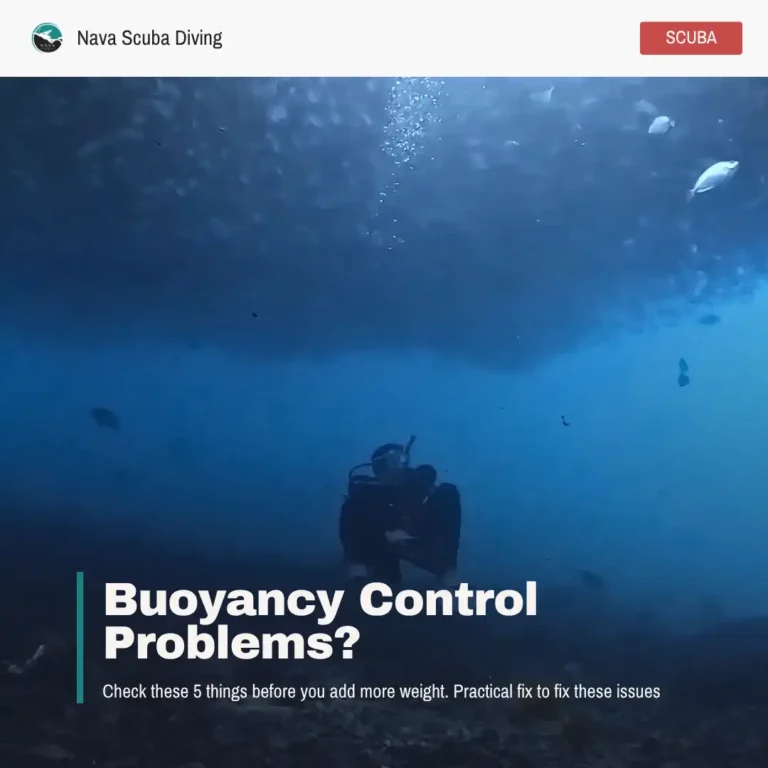
Many new divers face the same challenge even after their first certification: they still bob up and down. A little air into the BCD sends them rising, and a little out sends them sinking. Their hands keep sculling to hold position while their fins keep moving to maintain depth, and they’re often the first to run low on air. It doesn’t mean they’re bad divers. A standard Open Water course leaves very little room to practice and hone your buoyancy.
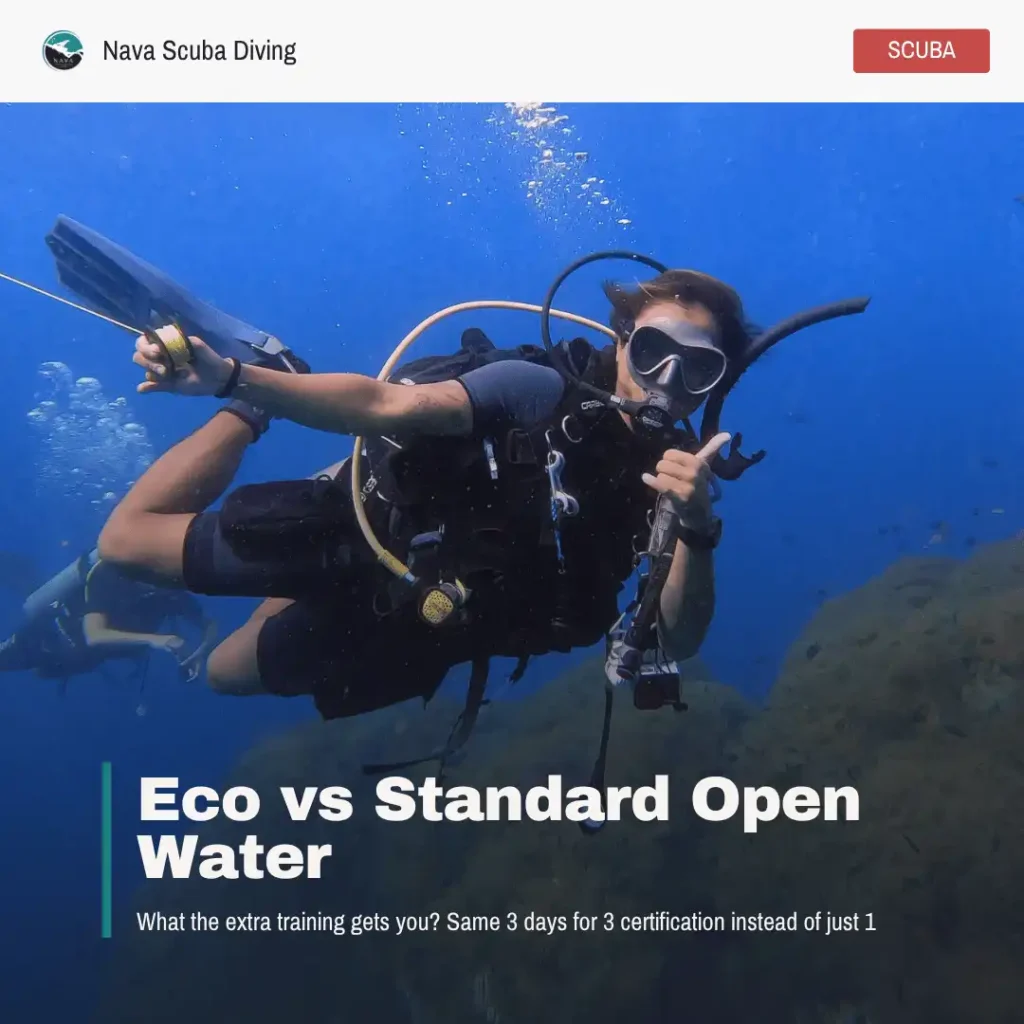
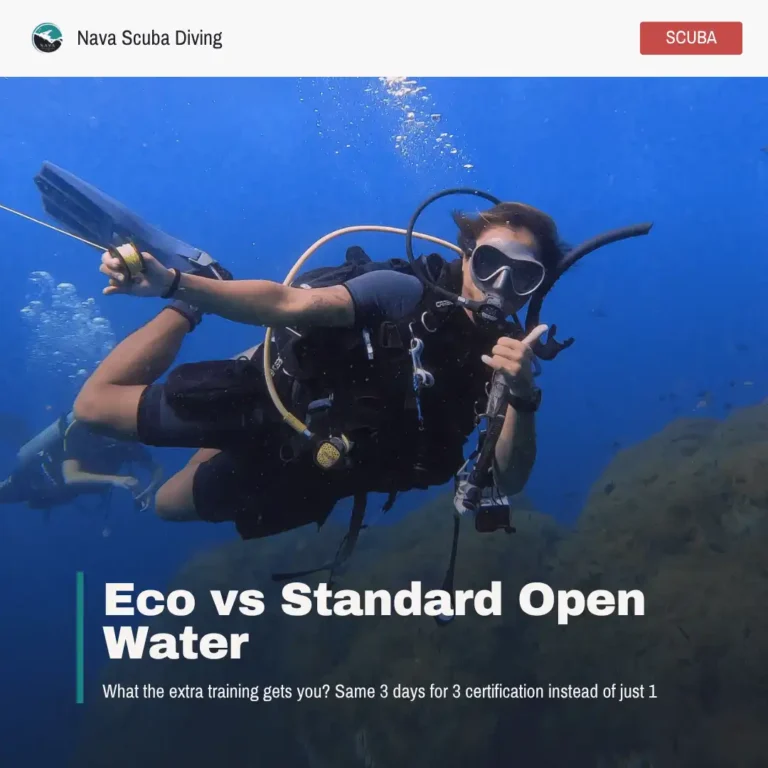
Nava Scuba Diving built the Eco Open Water course on Koh Tao around that gap. It takes the same three days as a regular Open Water course, adds Peak Performance Buoyancy training and PADI AWARE conservation learning, and gives you an extra ocean dive to practice in. The aim is that by the end of those three days, you can hover over a reef and watch small animals without kicking the coral.
Eco Open Water vs Open Water: What’s Different?
Eco Open Water is the full PADI Open Water Diver course plus two extra specialties: Peak Performance Buoyancy and PADI AWARE. It all still takes three days.
The difference is time in the ocean. You make five open water dives instead of the standard four, with buoyancy training built into them. You don’t have to rush through a skill and head back to the boat. There’s time to adjust your weights, fix your body position and try again until you can feel yourself settling.
See the schedule, what’s included and prices on the Eco Open Water course page.
Gain Three PADI Certifications from Just One Course
Three certifications might sound like three times the work, but they aren’t. All three are built into one three-day course, and you work on them side by side along the way. The first lets you dive, and the other two cover buoyancy and responsible, lower-impact diving.
- PADI Open Water Diver. Your main certification, valid for life, for diving to 18 meters with a buddy.
- PADI AWARE Diver. Covers the threats facing the ocean and how to dive with less impact on marine life.
- PADI Peak Performance Buoyancy Diver. Shows any dive center you’ve trained your buoyancy beyond entry level.
Why Does Good Buoyancy Matter for the Reef?
Many new divers finish Open Water and still struggle to stay level underwater. Their legs hang low, their body crouches, or their gauge touches coral without them noticing, and every kick stirs up the bottom and lowers the visibility. Nobody means to do it, of course, but broken coral takes years to grow back. Learning good neutral buoyancy in your first course helps with all of this.
- You can hover at one depth without sinking to the bottom or rising to the surface.
- Your body and gear stay clear of the coral.
- A flat body position and controlled finning raise less sediment.
- You kick and scull less, so you breathe more slowly and often get a longer dive from the same tank.
Is Eco Open Water Worth It for You?
Budget and time matter. So does what you want from your first course.
Eco Open Water suits you if you:
- want more ocean time than the minimum, especially for buoyancy
- want to feel relaxed and in control on your first dive trip
- want to understand what the ocean is up against and what divers can do about it
- plan to take Advanced Open Water later, since your first Peak Performance Buoyancy dive can count as an Adventure Dive under PADI’s rules
A standard Open Water course may suit you better if you:
- would rather learn the basics first and take more training in the future
- are traveling on a budget and plan to build your skills later
Still sorting out boat times, travel, or where to learn to dive on Koh Tao? Message the Nava team with your dates, plans and goals, and we’ll help you pick the course that fits.
Still Unsure About Eco Open Water? Here Are Answers for New Divers
Here are answers to the questions we hear most about the Eco Open Water course, so you can decide for yourself whether it’s right for you.
Reach out for more information
For most people, their first course is the only time an instructor watches their buoyancy up close. After that, they dive on their own for years, so it pays to learn it properly from the start. Our groups are small, usually two or three divers and never more than four, so your instructor can watch your buoyancy on every dive.
Before you arrive, read our first-time diving checklist and plan the rest of your stay with the Koh Tao travel guide. Don’t forget to message Nava Scuba Diving with your arrival date to ask questions or book your Eco Open Water course. PADI eLearning and your eCard are included, so there are no extra diving costs on top of the course fee.