Discover why eco-friendly scuba diving matters and learn the golden eco diving rules. Master sustainable diving practices with Nava Scuba Diving on Koh Tao.
Eco-Friendly Scuba Diving: Turn Every Dive into Ocean Protection
If you love scuba diving, you probably want the coral reefs and marine life to stay vibrant forever. But the truth is, the underwater world is much more fragile than it looks. Shifting your mindset toward eco-friendly scuba diving is no longer just a trend—it is a responsibility for every diver.
At Nava Scuba Diving, a PADI 5-Star Dive Center and certified PADI ECO Center on Koh Tao, we want to show you how fun and rewarding sustainable diving can be. You will learn the essential eco diving rules, discover how to avoid damaging corals, and understand exactly why eco-friendly diving matters. Get ready to protect the ocean while enjoying the absolute best dives of your life!
Why Eco-Friendly Diving Matters More Than You Think
Coral reefs are home to over 25% of all marine life, but they are fighting a tough battle against rising ocean temperatures, pollution, and irresponsible tourism.
In popular dive destinations, a simple mistake, like kicking a piece of coral with your fin, can destroy something that took decades to grow. This is why every diver needs to understand how to move underwater. The goal is to leave zero trace of human impact.
When hundreds of divers adopt sustainable diving practices, the positive impact is massive. Every time you dive carefully, you buy the ocean more time to thrive. That is the true power of eco-diving.
3 Golden Eco Diving Rules to Protect the Sea
Being an eco-conscious diver does not mean you have to stress out and ruin your fun. It is simply about balancing your enjoyment with the safety of the marine environment because you know how to dive respondsibly with minimal environmental impact.
Whether you are taking your first course on Koh Tao or already have hundreds of dives logged, keep these three rules in mind.
1. Control Yourself (It Starts With You)
Ocean protection starts with your own body. If your gear and fins are not crashing into things, the reef is safe.
Master Your Buoyancy
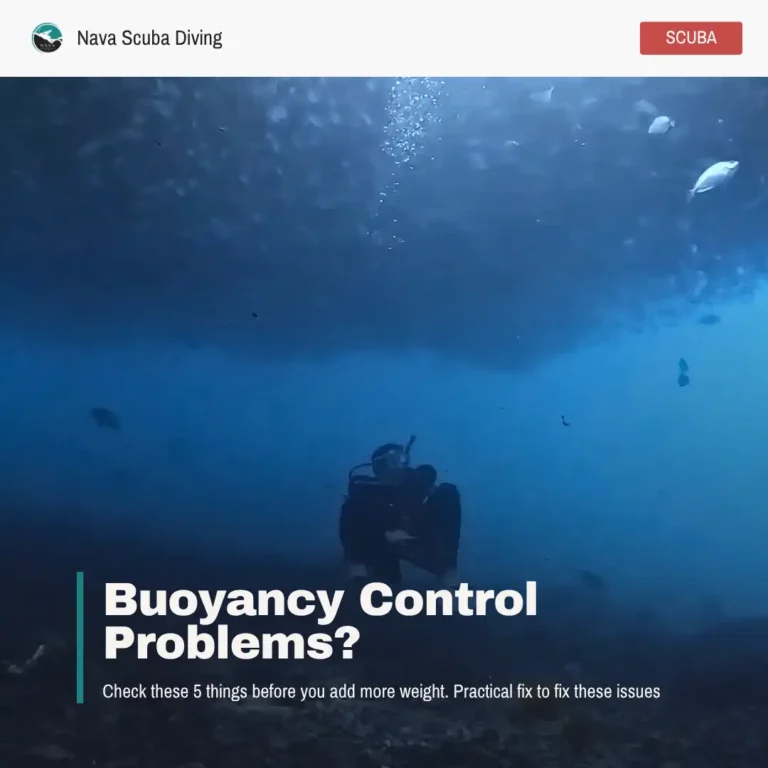
Want to know how to avoid hitting corals? The number one answer is perfect buoyancy control. Most reef damage happens because divers sink too fast or cannot stay hovering. By mastering your breathing and properly using your BCD, you will float like an astronaut without disturbing the sand or corals below.
This skill can be practiced and trained by diving regularly or if you want a quicker shortcut, you can learn and practice more from PADI Advanced Open Water Course or PADI Peak Performance Buoyancy Course.
Adjust Your Finning Techniques
Kicking hard in a standard “flutter kick” might make you swim faster, but it easily kicks up sand and can accidentally smash nearby rocks. Switch to the “Frog Kick.” It is much gentler, keeps the water clear, and actually saves your energy.
Streamline Your Gear
Dangling gear is dangerous for the reef. If your air gauge (SPG) or spare breathing hose (octopus) is swinging loose, it can drag across the corals. Always clip your gear close to your body. Make this a priority during your pre-dive buddy check!
Practice Responsible Underwater Photography
We all want great photos, and that is totally fine! Just remember to practice responsible diving. Avoid flashing bright lights directly into marine animals’ eyes, and never rest your hands or knees on the reef to get a steady shot. A good photo is never worth destroying nature.
2. Respect the Ocean (You Are a Guest)
Once you have control of your body, the next step is minimizing your disturbance to the wildlife, following global standards like Green Fins.
Look, But Do Not Touch
Corals and marine animals do not want to be touched. The best divers act like they are invisible. Keep your distance. Fun fact: Even if you see an old glass bottle on the sand, check it before picking it up—it might have become a home for a small octopus or fish!
Never Feed the Marine Life
Feeding fish completely disrupts the natural food chain. It changes their behavior and damages the ecosystem. Let nature take its course.
Always Listen to the Dive Briefing
Your dive guide knows the local area best. They know which corals are fragile and which animals need space. Paying attention to the dive briefing is the easiest way to ensure you dive safely and respectfully.
3. Dive with Purpose
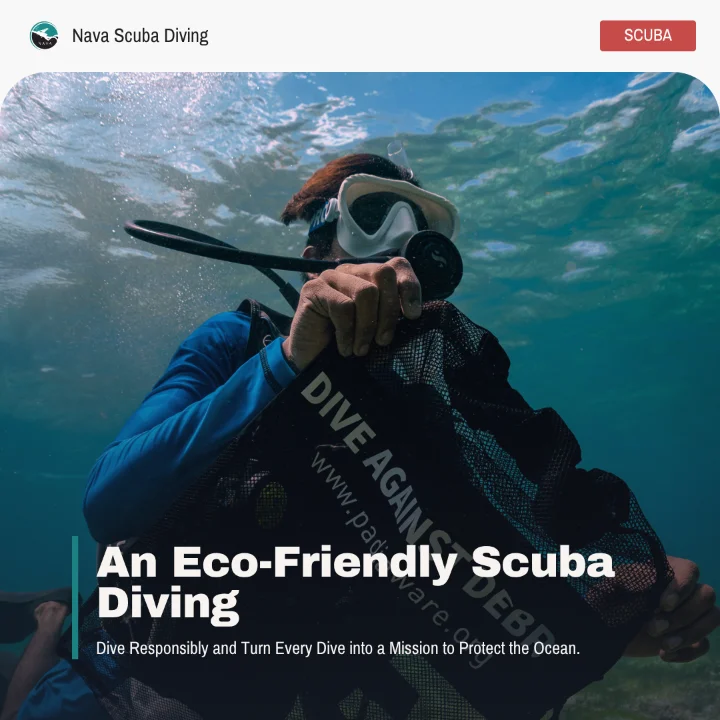
Take your eco-friendly scuba diving to the next level. Treat every dive as an opportunity to help. You can safely pick up stray plastic bags or join global initiatives like PADI AWARE.
The PADI AWARE foundation believes that small actions create real change. By picking up trash, participating in conservation events, and joining a network of ocean defenders, you give every dive a deeper meaning.
Diving responsibly with more understanding of the ocean help create more meaning to your dive and emphasize the mission to protect our ocean.
Land-Based Sustainable Diving Practices
Your efforts underwater are wasted if you forget about your habits on land. Ocean conservation starts the moment you pack your bags:
- Use Reef-Safe Sunscreen: Standard sunscreens contain chemicals that cause coral bleaching. Switch to a reef-safe brand, or better yet, just wear a rash guard.
- Ditch Single-Use Plastics: Bring a refillable water bottle and a tote bag. Stop plastic trash before it even reaches the beach.
- Choose an Eco-Friendly Dive Center: Support businesses that care. Look for shops that follow Green Fins guidelines or hold the PADI ECO Center status, just like Nava Scuba Diving.
- Share the Knowledge: Tell your friends and dive buddies about these rules to multiply the positive impact.
Upgrade Your Eco-Skills with Nava Scuba Diving
At Nava Scuba Diving, we weave eco-diving concepts into every single course. We want you to feel confident and capable of protecting the ocean from day one. If you want to sharpen your skills, check out these PADI courses:
- PADI Open Water Diver: The foundational course where we emphasize buoyancy and environmental respect right from your very first breath underwater.
- PADI Peak Performance Buoyancy (PPB): The ultimate course for eco-divers. Fine-tune your weighting, master your breathing, and learn to hover perfectly so the reef stays 100% safe.
- PADI Advanced Open Water Diver: Improve your overall skills, dive deeper, and choose exciting adventure dives like “Fish Identification” to better understand the marine life you are protecting.
Being a great diver is not just about seeing beautiful things; it is about making sure those beautiful things survive for the next generation. Start your eco-diving journey with Nava Scuba Diving on Koh Tao today!
Dive with Confidence: Protect the Ocean with Nava Scuba Diving
Eco-friendly scuba diving is not complicated or out of reach. It all starts with understanding your impact and paying attention to the small details—like knowing how to avoid the reef and making the golden eco diving rules a permanent habit.
Once you do this, you will quickly see for yourself why eco-friendly diving matters. Every single action you take underwater affects the entire ecosystem. The more mindfully you dive, the more the ocean will “love you back,” rewarding you with experiences that are more beautiful, profound, and meaningful than ever before.
If you are ready to start your journey as a responsible diver the right way, Nava Scuba Diving is ready to show you the underwater world today!