Book 45 days in advance for 5% on-top discount on PADI Courses Dismiss
Skip to content
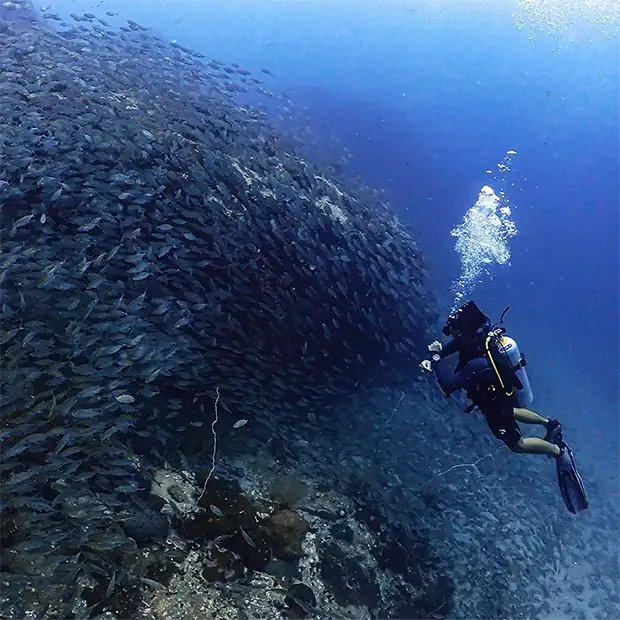
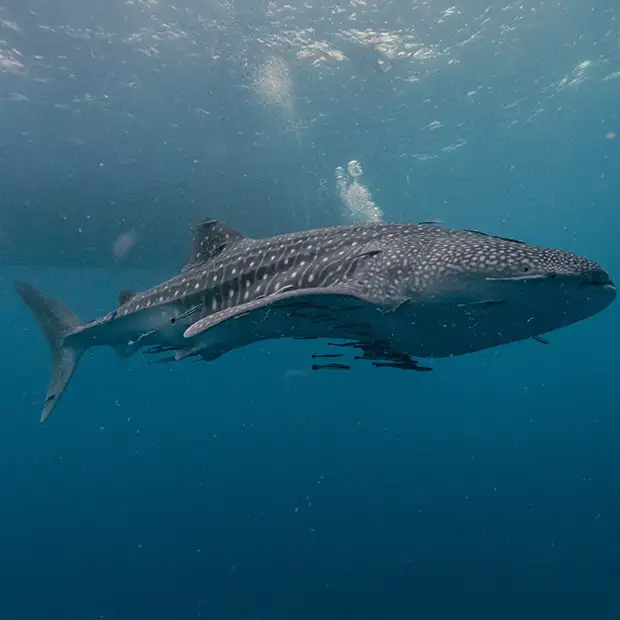
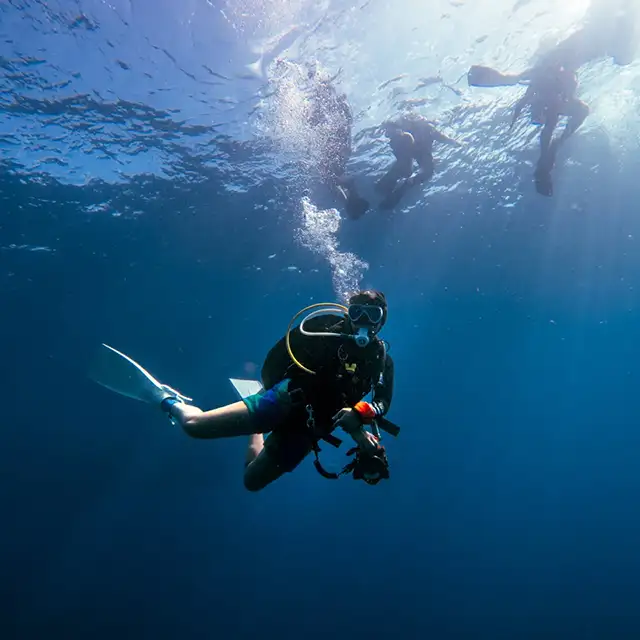
Unlock 30-meter dives and explore shipwrecks with the PADI Advanced Open Water Koh Tao course. Small groups, premium gear, and epic ocean vibes. Only 2 days!
฿10,500 – ฿11,000Price range: ฿10,500 through ฿11,000
Getting your PADI Open Water certification was amazing. Breathing underwater for the first time is unforgettable. But now you are scrolling through dive videos, hearing stories from other divers on the boat, and realizing something important: the coolest stuff is usually a little deeper. That is exactly where the PADI Advanced Open Water Koh Tao course comes in.
Do not let the word “Advanced” intimidate you. You do not need to be an expert to take this course. “Advanced” simply means you are advancing your current skills. Think of it as a VIP pass to better dive sites, sharper buoyancy, and much safer diving. This course is all about expanding your scuba skill set, gaining real-world confidence, and collecting underwater experience under the direct guidance of our expert instructors. You learn by doing, not by sitting in a classroom.
Committing to your next certification is a big step, but the rewards are entirely worth the effort. The PADI Advanced Open Water course is specifically designed to polish your foundational underwater skills and give you the official green light to explore environments that Open Water divers simply cannot reach. Here is what you get out of it.
The number one reason divers take the PADI Advanced Open Water course is to extend their maximum depth limit from 18 meters (60 feet) to 30 meters (100 feet). This unlocks a massive new world of dive sites globally.
In Koh Tao alone, diving deeper means accessing the famous Chumphon Pinnacle, where massive schools of batfish and barracuda hang out. It also means you get to explore the HTMS Suphairin shipwreck, which sits comfortably below the 18-meter mark. You simply cannot see these properly with just the PADI Open Water license. If you plan to dive the Maldives, Bali, or the Red Sea in the future, that 30-meter card is mandatory.
Stepping up your training makes you a safer diver. The ocean is beautiful but unpredictable. As you gain more guided experience, you learn how to handle deeper environments, manage your air consumption better, and navigate complex underwater terrain using a compass.
Essentially, you will stop to just following the dive guide and start thinking like a highly independent diver. Furthermore, getting your buoyancy dialed in means longer dive times. You will use less air, glide effortlessly, and ensure zero accidental damage to the delicate coral reefs.
Think of this course as a “choose your own adventure” setup. To get certified, you must complete exactly five adventure dives. Only two of these are mandatory for every diver worldwide: the Deep Dive and the Underwater Navigation Dive.The remaining three dives are completely up to you.
Want to explore a sunken navy ship? Choose the Wreck Dive. Curious about the ocean after dark? Lock in a Night Dive. Keep crashing into the sand? Go for Peak Performance Buoyancy. You customize your training based on the exact type of underwater explorer you want to become.
The short answer is: whenever you are ready to explore more. There is absolutely no mandatory waiting period or minimum logged dives required after your PADI Open Water course. Jumping straight in is incredibly common. Here is a breakdown of the best times to level up:
We absolutely hate hidden fees. When you book your Advanced Open Water course with Nava Scuba Diving, the price you see is the price you pay. We make sure you have everything required for a smooth, stress-free experience.
*This schedule can be changed due to the weather and other factors
The PADI Advanced Open Water Koh Tao course consists of two key sections: knowledge development and adventure dive. Unlike the PADI Open Water course, it does not require major study before arrival. Most of the course will be done at the dive center and during the dive itself.
The knowledge development is associated with the three chosen adventure dives and the two mandatory dives. They are normally done after the dive itself except the ‘Thinking like a diver’ section which can be done in advance after you receive the e-learning from our online booking.
There are two mandatory adventure dives: Deep Adventure Dive and Underwater Navigation Adventure Dive. The remaining three adventure dives are elective adventures that can be chosen based on your preference. However, our instructors may suggest what they think is best for your skill development.
These two dives are non-negotiable. They build the critical foundation of your new Advanced certification.
Welcome to the deep blue. This dive introduces you to the physiological changes, safety protocols, and strict planning required for diving between 18 meters and 30 meters. Under the direct supervision of your Nava instructor, you will experience firsthand how pressure affects objects at depth.
We usually bring down a colorful neoprene chart to show you how colors like red and yellow completely disappear at 30 meters. You will also learn how to closely monitor your air consumption, which drastically increases at depth.
Finally, you will learn to identify the signs of nitrogen narcosis. This is a temporary, harmless, but noticeable feeling of mild intoxication that can occur in deeper water. It vanishes as soon as you ascend.
Getting lost underwater ruins a good dive. The navigation dive turns you from a follower into a leader. You will learn how to use an underwater compass with absolute precision. You will practice estimating distances underwater using kick cycles (counting your fin kicks) and elapsed time.
Your instructor will have you navigate a straight line out and back, and then perform a complex square or rectangle pattern over the reef. Mastering this means you can confidently find your way back to the dive boat without needing to surface and look around. It is a massive boost to your underwater confidence.
This is where you make the course your own. Choose three of the following options to complete your five-dive requirement. If you are unsure, our instructors will happily help you pick based on the current weather conditions and your personal diving goals.
If there is one elective we aggressively recommend to every single diver, it is this one. Good buoyancy is the exact metric that separates beginners from pros. This dive is entirely focused on achieving perfect neutral buoyancy. You will practice hovering effortlessly in multiple positions without using your hands, gliding inches over delicate reefs without touching them, and utilizing your lung volume to make micro-adjustments to your depth.
Better buoyancy means you encounter less drag, which means you use less air, which ultimately means your dives last longer. You will also fine-tune your weight system, often dropping unnecessary lead from your belt, making your dives far more comfortable.
Are you ready to see a completely different ocean? As the sun sets over Koh Tao, the nocturnal predators come out to hunt. You will drop into the dark, armed with an underwater torch. You will learn how to communicate using light signals, manage your spatial awareness in the dark, and observe creatures you rarely see during the day.
Expect to see hunting barracuda, giant moray eels swimming freely, and bioluminescent plankton that sparkles neon blue when you wave your hands in the water. It is a surreal, unforgettable experience.
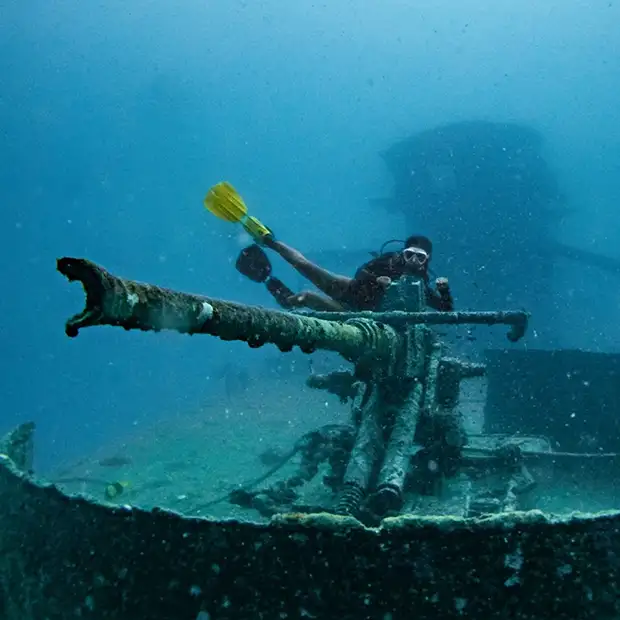
Koh Tao is home to the famous HTMS Sattakut. This is a former Thai Navy craft that was intentionally sunk to create a thriving artificial reef. It sits beautifully upright in the sand, with the top of the wreck at around 18 meters and the propellers resting near 30 meters.
During this dive, you will learn how to safely navigate the exterior of a massive shipwreck. You will practice identifying potential hazards like sharp metal edges or snagged fishing lines, and you will observe how marine life transforms a sunken piece of human history into a vibrant habitat.
Note: You will not swim inside (penetrate) the wreck on this dive. That requires the full PADI Wreck Diver Specialty course, which we highly recommend taking next!
Do you ever point at a weird fish underwater and wonder, “What on earth is that?” The Fish ID dive turns you into a casual underwater marine biologist. You will learn about the basic families of fish that inhabit the Gulf of Thailand. You will learn how to identify them by their overall shape, fin placement, swimming patterns, and habitat preferences.
We will also teach you the specific hand signals the pros use to point out sea turtles, reef sharks, triggerfish, and tiny nudibranchs to dive buddies. Knowing exactly what you are looking at makes every dive infinitely more interesting.
Want to stay deeper for a longer time? Enriched Air (commonly known as Nitrox) replaces some of the nitrogen in your scuba tank with extra oxygen. Standard air is 21% oxygen; Nitrox is usually 32% oxygen. Less nitrogen entering your body means you have significantly longer allowable bottom times without going into decompression.
This adventure dive introduces you to the safety procedures of Nitrox diving. You will learn how to use an oxygen analyzer to test your own tank and how to set your personal dive computer for a Nitrox mix. It is the perfect introduction to the most popular specialty course in the world.
There are many more elective dive adventures for you to choose from. Our instructor may also recommend you what seems best for your skills set and experience in order to prepare you for a more challenging adventure in the future!
*Please feel free to ask our dive professionals for more details.
All reservations may not be cancelled. Full payment will be forfeited unless approved under a medical emergency or booked with a free cancellation benefit. For full information, please visit our terms and conditions here.
Not at all. Most divers actually find it much easier and far more relaxed than the initial Open Water course. There are no intense skill circuits. You do not have to take your mask off underwater, and you do not have to practice out-of-air emergencies. It is purely about going diving, trying new activities, and tweaking your technique under the watchful eye of an instructor. Plus, there is no final written exam!
It is incredibly rare to “fail.” PADI courses are performance-based. This means as long as you meet the specific requirements of the dive (for example, successfully navigating the compass square), you pass that dive. If you struggle with a specific skill, our Nava instructors will patiently work with you until you nail it. We are here to coach you to success.
You need a baseline of average physical fitness, exactly the same as your Open Water course. Deep diving does not require you to swim faster or work harder. In fact, you should be moving slower and breathing calmer. As long as you are healthy and have no respiratory or cardiovascular issues, you are good to go.
The physics of equalization are exactly the same whether you are at 5 meters or 30 meters. Actually, the most significant pressure change happens in the first 10 meters. As long as you equalize early and often during your initial descent, your ears will be perfectly fine. If you feel discomfort, simply signal your instructor, ascend slightly until the pressure clears, equalize, and continue down slowly.
| Booking Class | 24h flex, saver |
|---|
| Booking Class | 24h flex, saver |
|---|